24/7 Plumbing Answering Service That Books Nights And Weekends

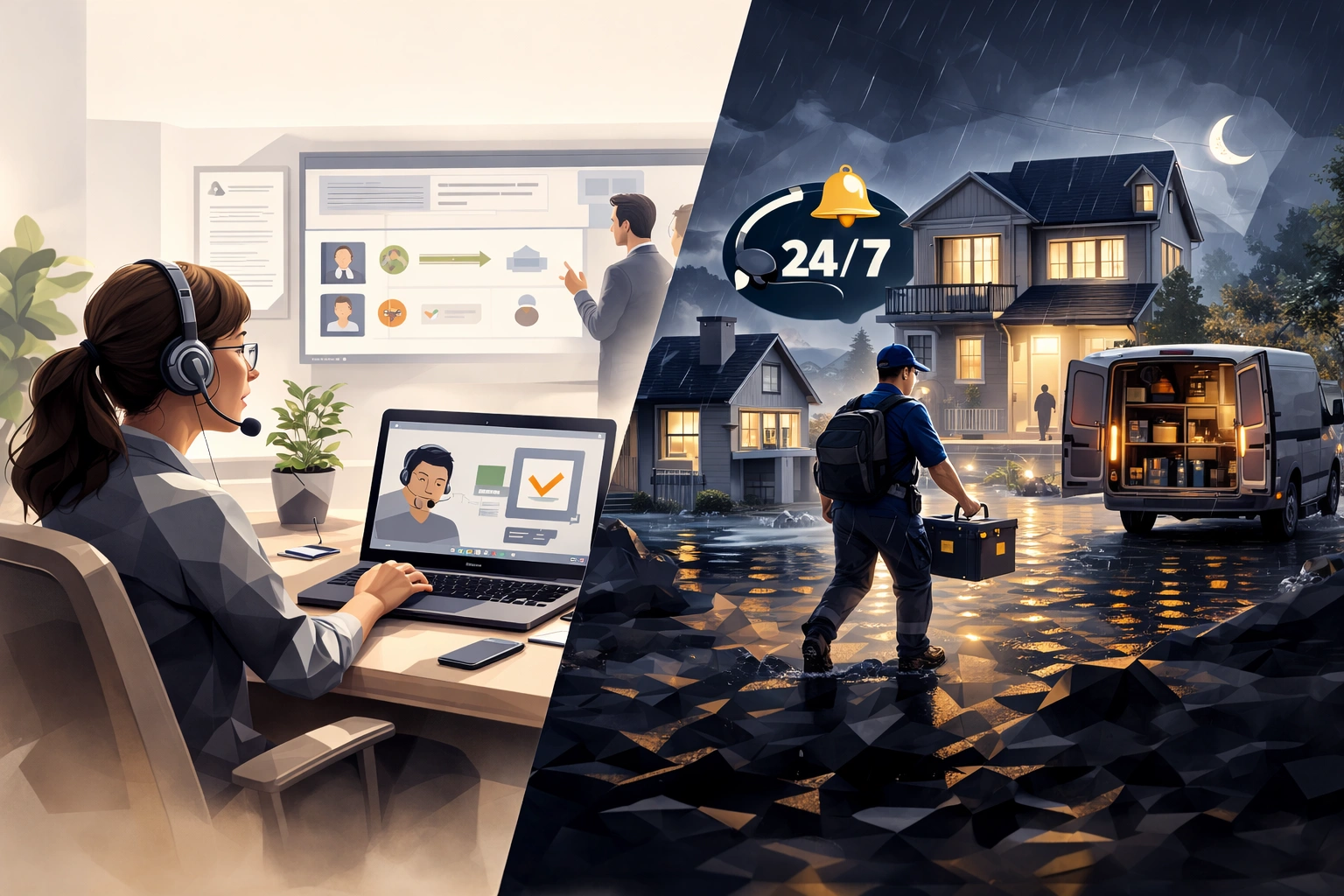
A 24/7 plumbing answering service only protects revenue if it converts after-hours calls into a clear, owned next step. “Answered” is not “saved.” Leads leak when urgency is misclassified, availability stays vague, access details are missed, and the morning team inherits free-text notes with no callback time.
A strong setup does three things: triage fast, capture job-ready details, and create a structured outcome. Minimum intake: severity and safety, a bookable two-hour window, verified address, and access readiness (who will be on-site, gate code, pets, parking). Minimum outcomes: emergency escalation, confirmed booking, or a callback scheduled with a specific time and owner.
Evaluate options on routing accuracy, confirmed windows, CRM logging in structured fields, deduped follow-ups, and QA tied to bookings, not generic “good calls.” Convin can be a potential product solution company to log outcomes, create SLA-bound tasks, and audit after-hours quality so weekend performance stays consistent.
A 24/7 plumbing answering service is not a staffing choice. It is revenue insurance for the hours when urgency spikes and customers want help now. Nights and weekends are when leaks grow, backups spread, and the caller is picking the first provider who confirms anytime availability and a clear next step.
The real risk is that “answered” does not mean “booked.” If the call ends with thin notes, missing access info, or no response time, the lead is already fading. The customer will not pause. They call someone else. Worse, shaky intake triggers wasteful dispatch: the wrong technician, the wrong parts, or a truck roll that should have been arranged differently.
A strong 24/7 plumbing answering service does three things consistently: it identifies urgency fast, captures job-ready details without dragging the call, and creates an owned next step the morning team can execute without guesswork. That means confirming a real time window, access readiness, and the exact problem symptom, then locking the outcome into your CRM or dispatch system so follow-ups do not depend on memory. When that intake is tight, after-hours calls stop being chaos and start becoming predictable bookings and faster service recovery.
Check a sample booking-quality scorecard
Where After-Hours Plumbing Leads Leak
After-hours lead loss usually comes from small misses that compound by morning: unclear urgency, unclear ownership, and incomplete booking context.
Customer: My kitchen is flooding. I need help tonight.
Agent: I can help. Is water actively running right now?
Customer: Yes, it’s still leaking under the sink.
Agent: Okay. What’s your address and unit number?
Customer: 24 Lakeview, Apt 5B. I can’t stay up all night.
Agent: Someone will call you back.
Customer: When exactly?
Takeaway: The breakdown is no callback SLA and no owner. Confirm a time window and assign the next step to one queue.
These are common friction points that show up as volume grows, even in well-run operations:
- Urgency and routine requests sometimes land in the same queue, so priority handling is not always consistent
- Availability can get captured as a general preference (“tomorrow”) instead of a bookable window dispatch can route around
- Access details (gate code, parking, pets, on-site contact) can be missed in fast calls, which increases reschedules
- The morning handoff may include notes that are readable, but not structured enough to execute without follow-up calls
- Without a simple quality signal, it is hard to spot which after-hours scenarios are creating avoidable callbacks
A 24/7 plumbing answering service works only when every after-hours call ends with a clear outcome: priority level, confirmed window, access notes, and a named owner. When those basics are locked, the morning handoff becomes execution, not cleanup.
See how callback SLAs prevent drop-offs
This blog is just the start.
Unlock the power of Convin’s AI with a live demo.
What Convin Adds To After-Hours Operations
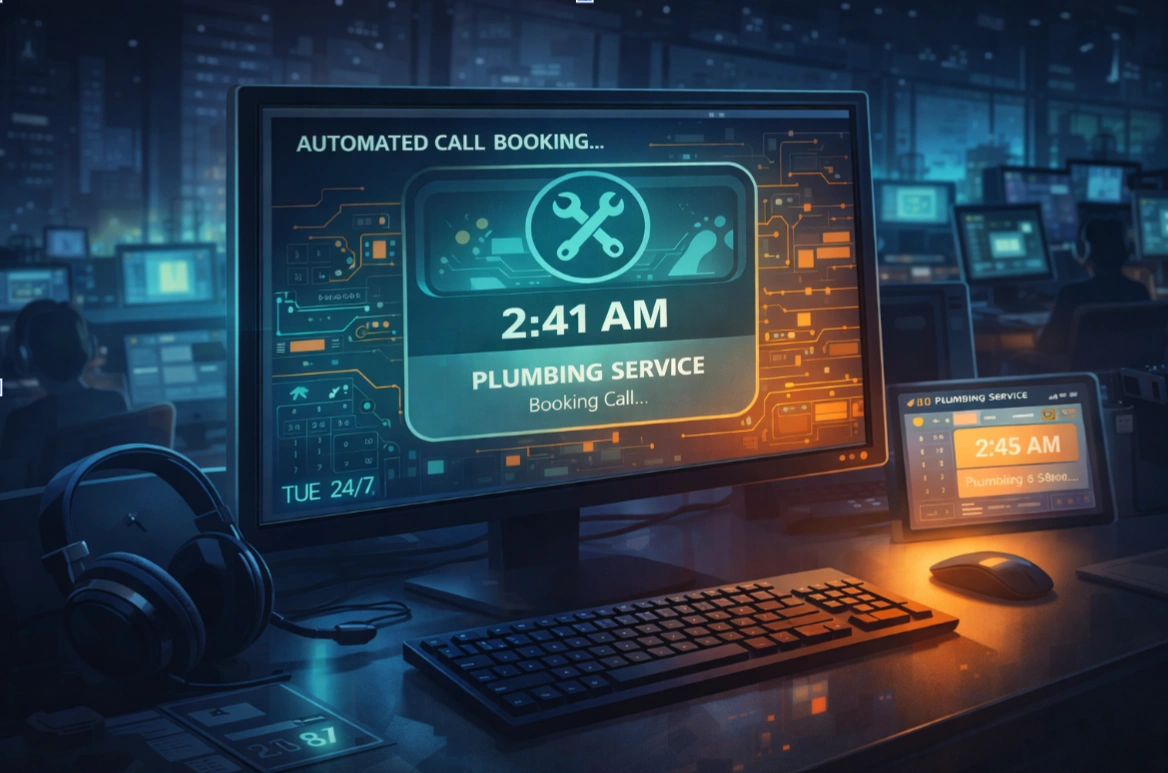
After-hours systems break when a conversation does not turn into a next step. That is the gap Convin is built to close: converting calls and web requests into trackable outcomes, confirming follow-ups by SMS, and keeping after-hours intake consistent through structured capture and measurable handoffs.
In a 24/7 plumbing answering service workflow, Convin supports teams with AI Phone Call, AI SMS, and an AI Website Widget. AI phone calls capture urgency, service area, and key constraints, then gather job-ready details like access notes, unit type, and safety risks. When booking is appropriate, it can confirm an appointment window and send an immediate SMS confirmation. When booking should wait, it can trigger a time-bound callback with a clear time promise, so the customer is never left with “someone will call.”
Convin also keeps execution clean by pushing intake outcomes into your CRM, triggering follow-ups that do not depend on memory, and making after-hours intake performance visible, not assumed. This matters most on nights and weekends because volume can hide small misses. You can answer every call and still lose jobs if urgency routing, booking clarity, and next-step ownership are inconsistent.
Explore Convin’s urgency tags and SLA routing
A Practical After-Hours Workflow With Convin
A reliable workflow stays short, trigger-based, and anchored to state change. It avoids fixed sequences that keep nudging customers when nothing changed, and it focuses on producing one clean, executable next step.
Step 1: Triage In Under 60 Seconds
Capture only what changes routing and dispatch: severity (active leak, overflow, no water, sewer smell), safety (water shutoff reachable, electrical risk), a bookable time window (two-hour range), and access constraints (who will be on-site, gate code, pets, parking). When these four inputs are confirmed, after-hours calls stay simple and the morning team can execute without back-and-forth.
Step 2: Convert The Call Into An Owned Outcome
Every call must end in a structured outcome, not free-text notes. The outcome should be executable without calling the customer again: emergency escalation to on-call, booked slot confirmed, callback requested with a specific time, or not serviceable (out of area, wrong service type). The customer should hear a real plan, and the system should record an owned task tied to it.
Customer: I can do tomorrow, but only after 6 pm.
Agent: Understood. I’ll set a callback at 6 pm today to confirm the booking.
Customer: Please do not call me five times. One clear update is enough.
Agent: Agreed. You’ll get one confirmation message after the callback.
System record: Callback requested after 6 pm. No task created.
Convin: Detects the callback time, logs it, and creates an owned 6 pm task with an SLA.
Takeaway: The issue is not effort. It is missing task ownership. Convert the request into an owned follow-up with an SLA.
Step 3: Quality-check The Moments That Lose Jobs
Do not guess. Review the moments that typically create avoidable callbacks and reschedules: urgency routed inconsistently, time windows left vague as “tomorrow,” commitments like “soon” instead of a specific callback time, and uneven capture of address and access details across shifts. Automated QA helps because weekend performance usually varies by rep and shift, and small misses repeated across calls can quietly turn into lost jobs by morning.
See how bookings confirm windows and access
Turning After-Hours Intake Into A Consistent Next Step
After-hours coverage stays reliable when nothing depends on memory. The best setups keep one customer thread, one clear next action, and one update only when the customer’s status changes.
What to lock in:
- Single thread per request so repeat callers do not create parallel entries
- Status-based actions like callback requested, window shared, SMS confirmed, reschedule asked, issue flagged
- One outbound touch per change so customers get one clean update, not overlapping follow-ups
- Clean fields in CRM or scheduling for urgency, ZIP, time window, access notes, confirmation status
- Intake standards tied to bookings urgency handled right, time window confirmed, access captured, promise kept
If you are evaluating options, prioritize systems that connect calls, SMS, and web requests into one trackable flow. That is where Convin’s US suite fits: AI Phone Call + AI SMS + AI Website Widget working together so after-hours requests turn into a clear next step, fast.
Explore CRM fields that make outcomes usable
FAQs
- How should a 24/7 plumbing answering service triage emergencies fast?
Use leak severity, safety risk, shutoff ability, and location cues to route on-call immediately and avoid mixing urgent and routine. - What must a 24/7 plumbing answering service capture before dispatch?
Confirm address, unit, active leak status, two-hour availability window, onsite contact, and access notes like gate codes, pets, parking. - How does a 24/7 plumbing answering service prevent lead leakage?
Set a specific callback SLA or booked slot, assign one owner queue, and log outcomes in CRM so morning teams act without guesswork. - Which after-hours model fits a 24/7 plumbing answering service?
Choose hybrid AI plus humans when volume spikes; it standardizes intake and escalates exceptions, while avoiding burnout and vague message-taking. - What metrics prove a 24/7 plumbing answering service works?
Track emergency routing accuracy, callback SLA adherence, reschedule rate from missing access, conversion to booked jobs, and QA scores across shifts.
The Real Options For 24/7 Coverage
Most teams evaluate after-hours coverage as “in-house vs outsourced.” In practice, there are four operating models, and the right choice depends on what you want the system to do after the phone is answered: triage urgency, capture job-ready details, and create a clean next step the morning team can execute.
The practical decision is not just who answers. It is whether after-hours coverage reliably produces a booked, executable outcome. If the model only captures a message, you will still lose leads overnight because customers do not wait for “We will call you back.”
Strong setups create clarity in the first interaction: urgency is tagged correctly, a real time window is confirmed, access notes are captured, and ownership is assigned so follow-up is SLA-bound. That is what turns after-hours calls into predictable dispatch instead of morning cleanup.